


 Now in
  UAE &
UAE &  USA - For Local Support & Service

Lathe Machines
We are Expert Manufacturer of Lathe Machines
Our Lathes are utilized for various processes like woodturning, metalworking, thermal spraying, metal spinning, glass-working, and parts reclamation. As a matter of fact, the Lathe Machines, we offer are also used for shaping up the pottery, and also commonly known for being the Potter's wheel. There are other uses of these Lathe Machines such as metalworking in various industries where the metals are processed through different methods. Hence, the lathes can also be utilized in order to compose different types of ornamental with the help of the three-dimensional solids mechanism that is present in the Lathe machine and it has incredible complexity & its own benefits.
Bhavya Machine Tools has supplied Lathe Machines to Bahrain, Iraq, Kuwait, Oman, Qatar, Saudi Arabia, the United Arab Emirates, Yemen, Dubai, and other nations. We have also worked with a number of clients in a wide range of sectors, including the auto, power, textile, research, and many more. Our equipment is successfully operating without any problems all across the world.
Lathe Machine Offered by Bhavya Machine Tools
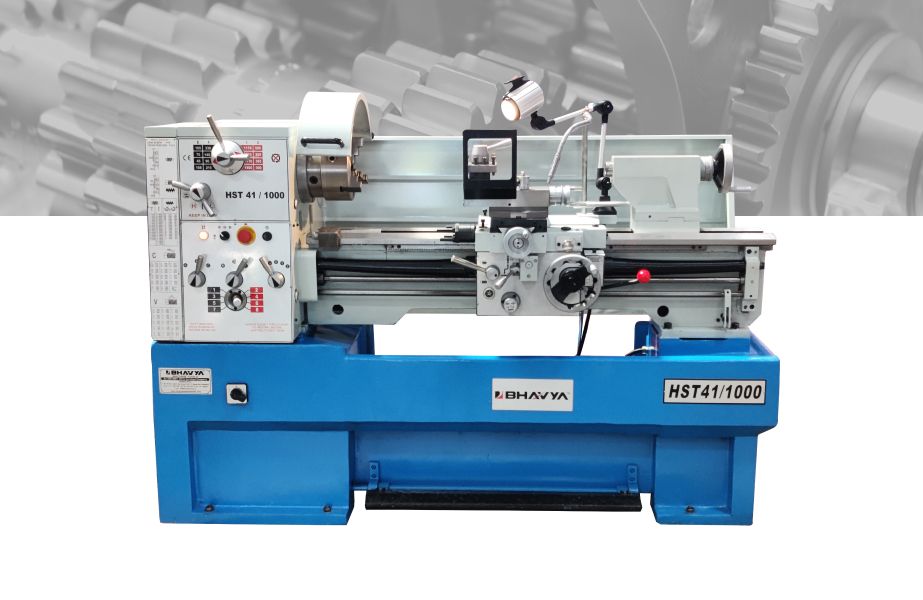
1. All Geared Lathe Machine
Bhavya Machine Tools’ All Geared Lathe Machine is an exceptional product designed for high precision, speed, and efficiency in machining operations. This lathe machine is equipped with a wide range of gears that offer flexibility in cutting various materials and sizes, making it suitable for diverse industrial applications. Known for its robust construction, this lathe machine is perfect for operations requiring higher speeds and consistency. The All Geared Lathe Machine is engineered to ensure smooth operation even under heavy workloads. It is widely used in industries such as automotive, aerospace, and general engineering for turning, threading, and facing operations.
With an advanced mechanism, this lathe machine ensures superior accuracy and is built to endure prolonged use, providing excellent results with minimal maintenance. Whether you are working with ferrous or non-ferrous metals, this machine can be relied upon to perform with high precision. The built-in gearbox enables seamless shifting of speeds, which makes it a versatile tool for a wide array of manufacturing processes.
Key Features of All Geared Lathe Machine:
- Precision gears for superior cutting accuracy
- Variable speed control for different material types
- Suitable for a wide range of applications
- Robust construction for prolonged durability
- Easy-to-operate design, ideal for long shifts
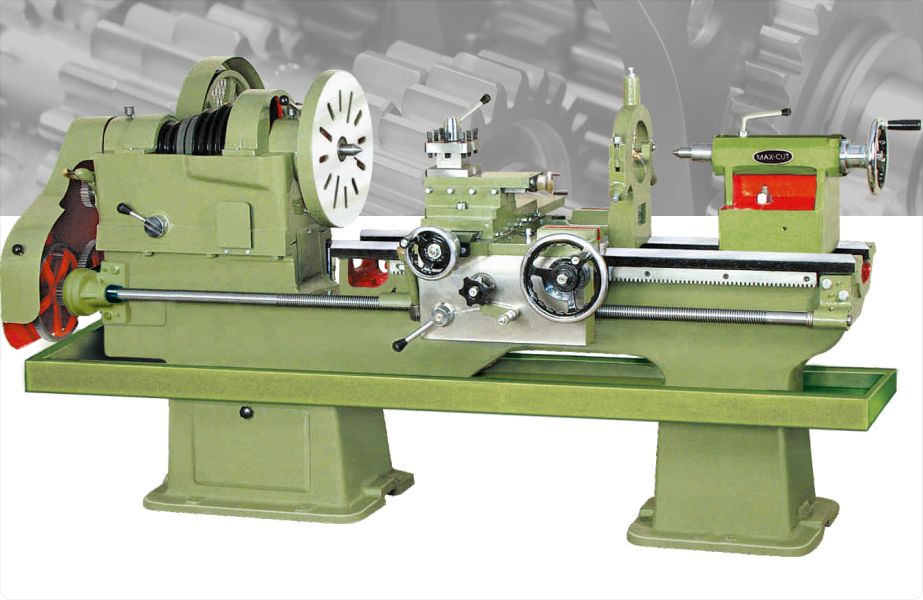
2. V-Belt Drive Lathe Machine
The V-Belt Drive Lathe Machine by Bhavya Machine Tools is a popular choice for industries that require versatile, reliable, and efficient machinery. Designed with a V-belt mechanism, this machine offers consistent performance and a smooth finish on materials such as metal, wood, and plastics. It operates at multiple speeds, providing users with flexibility when working on various projects. The V-Belt Drive mechanism is engineered for smooth operation and reduced vibrations, ensuring a quiet and efficient performance, especially during high-speed machining tasks.
This V-Belt driven lathe machine is designed for simplicity and ease of use, making it perfect for small to medium-sized workshops. It is ideal for general-purpose turning operations and provides an excellent solution for high-quality, cost-effective manufacturing. Whether you need to perform routine maintenance or intricate finishing work, the V-Belt Drive Lathe Machine ensures exceptional results at an affordable cost.
Key Features of V-Belt Drive Lathe Machine:
- Reliable V-belt drive mechanism for smooth operation
- Multiple speed settings for flexible use
- Easy maintenance and low operating costs
- Ideal for small to medium-scale operations
- Provides high-quality finishes on diverse materials
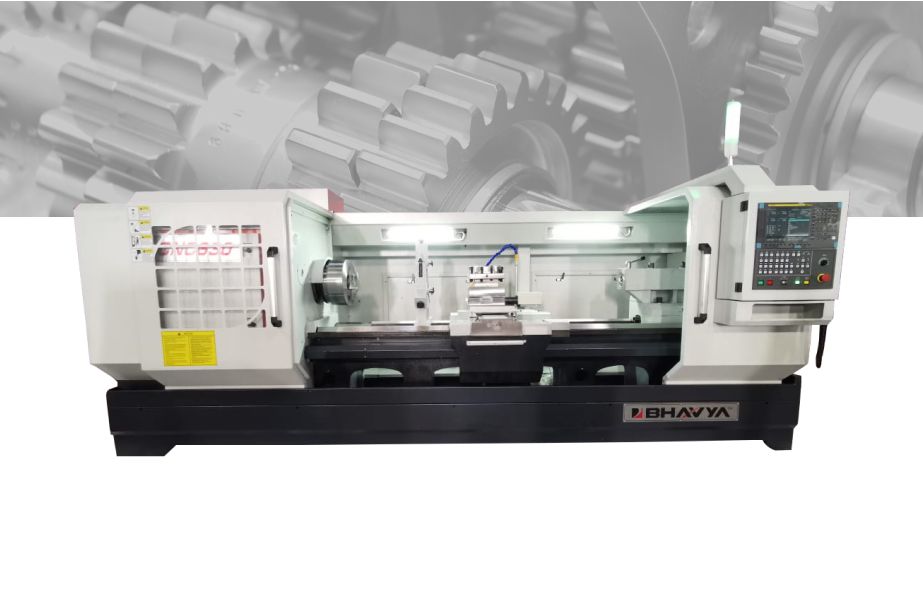
3. CNC Lathe Machine
Bhavya Machine Tools offers a high-tech CNC Lathe Machine designed for high precision and automation in machining processes. The Computer Numerical Control (CNC) feature makes this machine a game-changer in industries where automated, high-volume, and high-precision parts are essential. The CNC Lathe Machine operates with computerized controls to achieve intricate designs and produce consistent results with minimal human intervention. It is used extensively in industries such as aerospace, automotive, and defense, where accuracy and efficiency are paramount.
Equipped with advanced software and high-end components, this machine ensures superior performance across a wide variety of tasks, including drilling, boring, and turning operations. The precision offered by the CNC system allows for rapid production of parts with complex shapes and designs that would be difficult to achieve using traditional lathe machines. Additionally, the CNC Lathe Machine offers reduced human error, increased safety, and faster production times, making it the preferred choice for modern manufacturing facilities.
Key Features of CNC Lathe Machine:
- Computerized controls for high precision
- Ideal for complex, high-precision operations
- Increased automation for improved efficiency
- Reduced human error and greater safety
- Faster production times with minimal setup changes
Each of these lathe machines from Bhavya Machine Tools is designed to meet the highest industry standards, ensuring top-notch performance, durability, and reliability. Whether you are looking for an all-geared machine, a versatile V-belt drive model, or a state-of-the-art CNC lathe, Bhavya Machine Tools offers the perfect solution to meet your lathe machining needs.
FAQs
We supply a variety of lathe machines, including All Geared Lathe Machines, which are known for precision and flexibility in cutting various materials, ideal for high-speed operations. Our V-Belt Drive Lathe Machines offer smooth operation and are perfect for small to medium-sized workshops, providing versatility and reliable performance. Additionally, we offer CNC Lathe Machines that are fully automated for high-precision tasks, reducing human error and ensuring faster production. Each machine is designed for durability and efficiency to meet diverse industrial needs.
In our All Geared Lathe Machines, we use Taper Roller Bearings, which are known for their excellent load-carrying capacity and durability, ensuring smooth and efficient operation. For the V-Belt Drive Lathe Machines, we use GM Bushes, which help to maintain consistent performance and reduce friction, ensuring long-lasting and reliable operation. Both bearing types are selected for their ability to provide efficiency and durability under demanding machining conditions.
Yes, our All Geared Lathe Machines come equipped with a Norton Gearbox as standard, providing precise speed control and smooth operation across various machining tasks. For Cone Pulley and V-Belt Drive Lathe Machines, the option of a Norton Gearbox or Speed Gearbox is available, depending on customer requirements. This flexibility allows you to choose the gearbox that best fits your operational needs, ensuring optimal performance and efficiency for specific applications.
Yes, we supply our lathe machines with graded casting for the machine bed, ensuring exceptional strength and stability during operations. Additionally, the bed surface is flame-hardened, which enhances its durability and resistance to wear. This construction ensures long-lasting performance and precision, even under heavy workloads, and helps maintain the accuracy of machining operations over time.
Yes, we supply indigenous lathe machines that are manufactured in compliance with ISI standard specifications. This ensures that our machines meet the highest quality and safety standards, offering reliable performance and durability. By adhering to these specifications, we guarantee that our lathe machines are built to deliver precision, consistency, and efficiency in various industrial applications.
Yes, we supply ISI mark branded electric motors that meet the highest industry standards. These motors are sourced from well-known manufacturers and are designed for reliable and efficient performance. The electric motors we provide come with service centers located across India, ensuring easy access to maintenance and support. This makes them a trusted choice for long-term, trouble-free operation in various industrial applications.
We ensure prompt and efficient service for all our lathe machines. Our service engineers are deputed within 2 days to address any operational issues, minimizing downtime for your machinery. As for lathe machine spares, we maintain a comprehensive stock of commonly required parts, ensuring that we can dispatch them promptly based on customer demand. This commitment to quick service and spares availability helps keep your machines running smoothly with minimal disruption.
We typically keep a stock of standard lathe machines, allowing us to ensure quick delivery for most orders. For machines that are in stock, we can dispatch them promptly, minimizing waiting time. In case of custom requirements or special configurations, we will provide you with an estimated delivery timeline based on production and customization needs. Our goal is to deliver high-quality machines in the shortest possible time, ensuring minimal delay for your operations.
The packing of the lathe machine is tailored to the size of the machine and the distance to be traveled. We coordinate with the customer to ensure proper packing for safe transit. Transport insurance is arranged by us, providing coverage for the machine during transportation. This ensures that your lathe machine is protected from any unforeseen damage or loss while in transit, giving you peace of mind throughout the delivery process.
Our lathe machines stand out from the competition in several ways. First, we provide lathe machines directly from Ex-stock, allowing customers to visually inspect the machine before purchase, ensuring it meets their specific needs and requirements. This enables you to start your project immediately, without unnecessary delays. Additionally, we offer our lathe machines at a competitive price, ensuring you get the best value for your investment. Unlike many competitors, we do not require upfront advance payments, making the purchasing process more flexible and hassle-free for our customers.
A lathe machine is a tool that rotates a workpiece about an axis of rotation to perform various operations such as cutting, shaping, drilling, or sanding. It is commonly used in metalworking, woodworking, and other machining applications. The workpiece is held in place on the machine and is rotated against a cutting tool to remove material and create the desired shape. Lathe machines come in various types, including engine lathes, bench lathes, turret lathes, and CNC (Computer Numerical Control) lathes. They play a crucial role in the manufacturing and shaping of cylindrical components and are versatile tools used in a wide range of industries.
A lathe machine consists of several key components, each serving a specific function in the machining process. Here are the main parts of a lathe machine:
Bed: The bed is the horizontal base of the lathe, providing a rigid and stable foundation for other components.
Headstock: The headstock is located at the left end of the bed and contains the spindle, which holds and rotates the workpiece. It also houses various gearing mechanisms for controlling spindle speed.
Tailstock: The tailstock is located at the right end of the bed and is equipped with a movable spindle. It provides support to the other end of the workpiece, helping to maintain stability during machining.
Carriage: The carriage is mounted on the bed and can move along its length. It holds the cutting tool and provides the means to move the tool relative to the rotating workpiece.
Cross-slide: The cross-slide is mounted on the carriage and allows movement perpendicular to the axis of the lathe. It facilitates cutting operations across the diameter of the workpiece.
Compound Rest: The compound rest is mounted on the carriage and can swivel at various angles. It provides additional flexibility in tool movement and cutting angles.
Tool Post: The tool post is mounted on the carriage and holds the cutting tool. It can be adjusted to position the tool at the desired height and angle.
Apron: The apron is attached to the front of the carriage and contains mechanisms for controlling the feed of the carriage and engaging the lead screw for thread cutting.
Lead Screw: The lead screw is a threaded rod that runs parallel to the bed. It is engaged by the carriage to provide longitudinal movement during threading operations.
Chuck: The chuck is a device mounted on the spindle that holds and secures the workpiece. It can come in various types, such as three-jaw, four-jaw, or collet chucks.
Understanding the functions of these main parts helps operators effectively use a lathe machine for various machining operations.
There are several types of lathe machines, each designed for specific applications and varying in terms of size, capability, and functionality. Here are some common types of lathe machines:
Engine Lathe: This is the most common type of lathe and is widely used for general-purpose machining. It is suitable for turning, facing, threading, and other operations.
Bench Lathe: Bench lathes are smaller and more lightweight, designed to be mounted on a workbench. They are often used for smaller projects and hobbyist applications.
Speed Lathe: Speed lathes are characterized by high spindle speed and are primarily used for light-duty operations such as polishing, centering, and turning small parts.
Toolroom Lathe: Toolroom lathes are precision machines designed for high-accuracy and fine-tolerance work. They are commonly used in tool and die making and prototype manufacturing.
Turret Lathe: Turret lathes have a turret on the carriage that holds multiple tools. This allows for quick tool changes without the need to manually swap tools during machining.
Capstan Lathe: Similar to turret lathes, capstan lathes have a hexagonal turret that holds a set of tools. They are often used for mass production of small parts.
Gap Bed Lathe: Gap bed lathes have a removable section of the bed (gap) to accommodate larger workpieces. This design allows the lathe to handle larger diameters than the swing over the bed.
CNC Lathe: CNC (Computer Numerical Control) lathes are automated machines controlled by computer programs. They offer high precision and can perform complex operations with minimal manual intervention.
Automatic Lathe: Automatic lathes are designed for high-volume production. They can perform repetitive tasks automatically, making them suitable for mass production of simple parts.
Vertical Lathe (VTL): Vertical lathes, also known as vertical turning centers or vertical boring mills, have the spindle in a vertical orientation. They are used for large, heavy workpieces.
These are just a few examples, and there are variations and specialized lathes catering to specific needs within each category. The choice of lathe depends on the intended use, size of workpieces, and the complexity of machining operations.
The lathe machine serves several important purposes in the field of machining and manufacturing. Here are some key purposes of a lathe machine:
Turning Operations: The primary purpose of a lathe is to perform turning operations, where the workpiece is rotated against a cutting tool to create cylindrical shapes. This includes tasks such as reducing the diameter of a workpiece, creating grooves, and producing threads.
Facing: Lathe machines are used for facing operations, which involve machining the end of a workpiece to create a smooth and flat surface.
Drilling: Some lathe machines are equipped with attachments for drilling holes in the workpiece. This adds versatility to the machine's capabilities.
Boring: Boring operations involve enlarging existing holes in a workpiece. Lathe machines can be used for this purpose, particularly with the use of boring bars.
Taper Turning: Lathe machines can be set up to perform taper turning, where the diameter of the workpiece changes gradually along its length.
Threading: Lathe machines are commonly used for threading operations, creating external or internal threads on a workpiece.
Knurling: Knurling is a process of adding a textured pattern to the surface of a workpiece for improved grip or aesthetics. Lathe machines can be equipped with knurling tools for this purpose.
Parting Off: Parting off involves cutting a workpiece to separate it from the stock material. Lathe machines use specialized parting tools for this operation.
Facing Off: Facing off is the process of creating a flat surface on the end of a workpiece. It is commonly used to produce smooth and even surfaces.
Specialized Machining: Lathe machines can be adapted for various specialized machining tasks, including the production of intricate shapes, contours, and custom profiles.
Overall, the lathe machine is a versatile tool that plays a fundamental role in the manufacturing industry. It allows for the creation of a wide range of components with different shapes and sizes, making it a cornerstone of machining operations.
The operation of a lathe machine involves rotating a workpiece on its axis while a cutting tool is brought into contact with the material to remove excess material and shape the workpiece. Here's a step-by-step explanation of how a lathe machine works:
Mounting the Workpiece: The workpiece, which is the material to be machined, is securely mounted on the spindle of the lathe machine. The spindle holds and rotates the workpiece.
Setting Speed and Feed: The operator sets the desired rotational speed of the spindle based on the material being machined and the type of operation. Similarly, the feed rate, which determines how quickly the cutting tool advances, is set.
Positioning the Cutting Tool: The cutting tool is mounted on the tool post, which is part of the carriage. The operator positions the tool in close proximity to the workpiece, ready for machining.
Engaging the Feed Mechanism: The carriage, which holds the cutting tool, is engaged with the lead screw or another mechanism to allow it to move longitudinally along the bed of the lathe. This movement is controlled by the operator.
Contact with the Workpiece: As the workpiece rotates, the operator manually or automatically brings the cutting tool into contact with the rotating workpiece. The cutting tool removes material from the workpiece in the desired shape.
Adjusting Tool Position: The operator can adjust the position of the cutting tool, the depth of cut, and other parameters as needed to achieve the desired dimensions and finish on the workpiece.
Repeating or Changing Operations: Depending on the complexity of the machining task, the operator may need to repeat the process multiple times or make adjustments to the tool setup for different operations.
Finishing the Operation: Once the machining operation is complete, the cutting tool is disengaged from the workpiece. The finished workpiece can then be removed from the lathe.
It's important to note that there are variations in lathe machines, including manual lathes and CNC (Computer Numerical Control) lathes. In a CNC lathe, the entire machining process is automated based on a pre-programmed set of instructions, whereas manual lathes require more manual intervention by the operator. The basic principles of rotation, cutting, and shaping, however, remain consistent across different types of lathe machines.
Lathe machines are versatile and can work with a variety of materials. The choice of cutting tools, speed, and feed rates may vary based on the material being machined. Here are some common materials that can be worked on a lathe machine:
Metals:
- Ferrous Metals (e.g., steel, cast iron)
- Non-Ferrous Metals (e.g., aluminum, brass, copper)
- Alloys (e.g., stainless steel, bronze, titanium)
Plastics:
- Acrylic
- Nylon
- Polycarbonate
- PVC (Polyvinyl Chloride)
Wood:
- Hardwoods (e.g., oak, maple, mahogany)
- Softwoods (e.g., pine, cedar)
- Plywood and MDF (Medium Density Fiberboard)
Composites:
- Fiber Reinforced Plastics (FRP)
- Carbon Fiber Composites
Rubber:
- Natural Rubber
- Synthetic Rubbers
Fiberglass:
- Used in composite materials
Wax:
- Often used for prototype modeling
Thermoplastics:
- Polyethylene
- Polypropylene
- Polystyrene
It's important to note that the appropriate cutting tools and machining parameters should be selected based on the specific characteristics of each material. For example, metals may require different cutting speeds and feeds compared to plastics or wood. Additionally, the choice of tool materials and coatings can impact the efficiency and quality of the machining process. Always follow recommended guidelines and safety precautions when working with different materials on a lathe machine.
Ensuring safety is paramount when operating a lathe machine. Here are some essential safety precautions to take:
Read and Understand the Manual: Familiarize yourself with the lathe machine's manual and operating instructions before use. Follow manufacturer guidelines and recommendations.
Wear Appropriate Personal Protective Equipment (PPE): Always wear safety gear, including safety glasses or goggles, hearing protection, and appropriate clothing. Consider additional PPE based on the specific machining task.
Secure Workpiece Properly: Ensure that the workpiece is securely and properly mounted on the spindle. Use the appropriate chuck or collet for the workpiece size.
Check Machine Conditions: Before starting the machine, inspect it for any signs of damage, loose parts, or abnormalities. Make sure all guards and safety features are in place and functioning.
Select the Right Cutting Tools: Use the correct cutting tools for the material being machined. Ensure that tools are sharp, properly secured, and in good condition.
Set Speeds and Feeds Appropriately: Adjust spindle speeds and feed rates according to the material and the type of operation being performed. Refer to recommended cutting speed charts.
Avoid Loose Clothing and Jewelry: Wear clothing that is fitted and does not have loose ends. Remove jewelry and tie back long hair to prevent entanglement with moving parts.
Use Proper Tool Rest: Utilize tool rests and guides when applicable. Keep hands and other body parts clear of the rotating workpiece and cutting tool.
Turn Off Power When Making Adjustments: Before making any adjustments or changing tools, turn off the power to the lathe machine. Wait for all moving parts to come to a complete stop.
Work in Well-Lit Areas: Ensure the work area is well-lit to clearly see the workpiece, cutting tools, and machine controls.
Keep the Workspace Clean: Remove chips, debris, and excess material regularly. A clean workspace reduces the risk of accidents and improves machine performance.
Follow Lockout/Tagout Procedures: When performing maintenance or repairs, follow proper lockout/tagout procedures to prevent accidental machine startup.
Provide Adequate Training: Ensure that operators are adequately trained in the use of the lathe machine. Emphasize safe operating practices and emergency procedures.
Stay Alert and Focused: Avoid distractions and stay focused on the task at hand. Alertness is crucial for maintaining a safe working environment.
Always prioritize safety and adhere to the recommended practices to minimize the risk of accidents and ensure a secure working environment when using a lathe machine.
Yes, there are lathe machines designed to handle both metalworking and woodworking. However, while some machines are versatile enough for both materials, they are often optimized for specific tasks. Woodworking lathes tend to have different features such as larger swing capacities and lower speeds for shaping wood, while metalworking lathes are built for higher precision and stronger materials, with different tooling and speed adjustments. It’s important to choose the right lathe machine based on the material and the type of work you intend to perform for optimal performance.
The key difference between CNC (Computer Numerical Control) lathes and manual lathes lies in their operation. CNC lathes are automated machines that are controlled by computer programs, allowing for precise, repeatable, and high-speed production of complex parts with minimal human intervention. These machines are ideal for high-volume and intricate tasks, offering enhanced accuracy, faster turnaround times, and reduced human error. On the other hand, manual lathes require skilled machinists to operate, making them more suitable for smaller batches or simpler operations. While manual lathes offer greater flexibility for custom, one-off projects, they rely on the operator’s skill and experience for precision and efficiency.
Choosing the right lathe machine for a specific task involves considering various factors to ensure that the machine meets the requirements of the machining project. Here are some key considerations:
Type of Lathe: Identify the specific type of lathe that suits the intended tasks. For example, choose between engine lathes, CNC lathes, turret lathes, or specialty lathes based on the complexity and volume of work.
Size and Capacity: Consider the size of the workpieces you'll be working with. Choose a lathe with an appropriate swing over the bed and distance between centers to accommodate the size of your projects.
Material Compatibility: Ensure that the lathe is suitable for the materials you'll be machining. Different lathes may have specific features or capabilities that make them better suited for working with certain materials, such as metals, plastics, or wood.
Spindle Speed Range: Check the spindle speed range of the lathe. Different materials and cutting operations require specific spindle speeds for optimal results. Ensure that the lathe provides the necessary speed settings.
Power and Motor Capacity: Consider the power of the lathe's motor. Higher horsepower may be required for heavier cutting or larger workpieces. Ensure that the lathe's motor capacity meets the demands of your projects.
Precision and Tolerance Requirements: If precision is crucial for your projects, consider a lathe with features such as digital readouts, precision controls, and tight tolerances. CNC lathes are often chosen for high-precision work.
Tooling and Accessories: Assess the availability and compatibility of tooling and accessories for the lathe. Different tasks may require specific tooling, and having a variety of options can enhance the machine's versatility.
Ease of Use and Control: Consider the ease of use and control features. CNC lathes offer automation but may require programming skills, while manual lathes are straightforward but may require more operator skills.
Brand Reputation and Support: Research the reputation of the lathe manufacturer. Consider factors such as reliability, customer support, and the availability of replacement parts.
Budget Constraints: Determine your budget for the lathe machine. While it's essential to meet your machining requirements, consider the cost-effectiveness of the machine and its features within your budget.
Future Expansion: Anticipate potential changes in your machining needs. Choosing a lathe with room for future expansion or upgrades can be beneficial as your projects evolve.
User Reviews and Recommendations: Read user reviews and seek recommendations from experienced machinists. Real-world experiences can provide insights into the performance and reliability of a specific lathe model.
By carefully considering these factors, you can select a lathe machine that aligns with your specific machining tasks and meets the requirements of your projects.
Exhibitions
Headquarters - INDIA
 Mobile: +91-9825009216
 Email: inquiry@bhavyamachinetools.com

Quick Response
International Branch - USA
International Branch - UAE
- Mobile: +971-525859112
- Email: inquiry@bhavyamachinetools.com
Headquarters
Bhavya Machine Tools LLP
Sankalp Square 3B, Office No. 907, 908 & 909, Sindhu Bhavan Marg, Beside Taj Skyline, Opp. Montecristo Banquet, PRL Colony, Thaltej, Ahmedabad - 380058.
International Branch
Bhavya Machine Tools Trading LLC
Warehouse No.1, Building 5,
FAB Properties Complex,
Dubai Investment Park First,
Plot No. 598653,
Dubai, UAE.
Showroom
Bhavya Machine Tools
Plot No. 3, Survey / Block No. 86, PO. Vasna Chancharwadi, Nr. Divya Bhaskar Press, Bavla - Changodar Highway, Ta.: Sanand, Dist.: Ahmedabad - 382213, Gujarat, India.



Our Wide Range Of Workshop Machinery
- Bandsaw Machines
- Bending / Press Brake Machines
- CNC Lathe Machine
- Centerless Grinding Machines
- Cutting/Shearing Machines
- Electric Tapping Machines
- Hydraulic Press Machines
- Laser Machines
- Lathe Machines
- Milling Machine
- Pillar Drill Machines
- Pipe / Profile Machines
- Power Press Machines
- Radial Drill Machines
- Slotting Machines
- Threading Machines
- Fiber Laser Marking Machine
- Fiber Laser Cutting Machine
- Shearing Machine
- Folding Machine
- Saw Blade Sharpener
- NC Press Brake Machine